The Dynamics of Experience
There is a deeper layer. Inside the pediatric space, particularly in the minutes before engagement with clinicians, children are not simply occupying a room. They are
moving through an experience. That experience has sequence, tone, rhythm, and progression. It includes anticipation and interpretation, moments of stillness and moments of intensity.
In those early moments, the experience is beginning to take shape around the child. The environment influences how that experience forms. That is why the Middle Moment cannot be addressed
with decoration alone. It requires structure.
Defining Emotional Architecture
Emotional architecture is the deliberate shaping of that structure. It asks not only how a space looks, but how it guides experience over time. It considers where attention begins, how it
moves, and where it settles. It anticipates predictable human responses and integrates support into the environment itself.
This does not require dramatic transformation. It requires coherence:
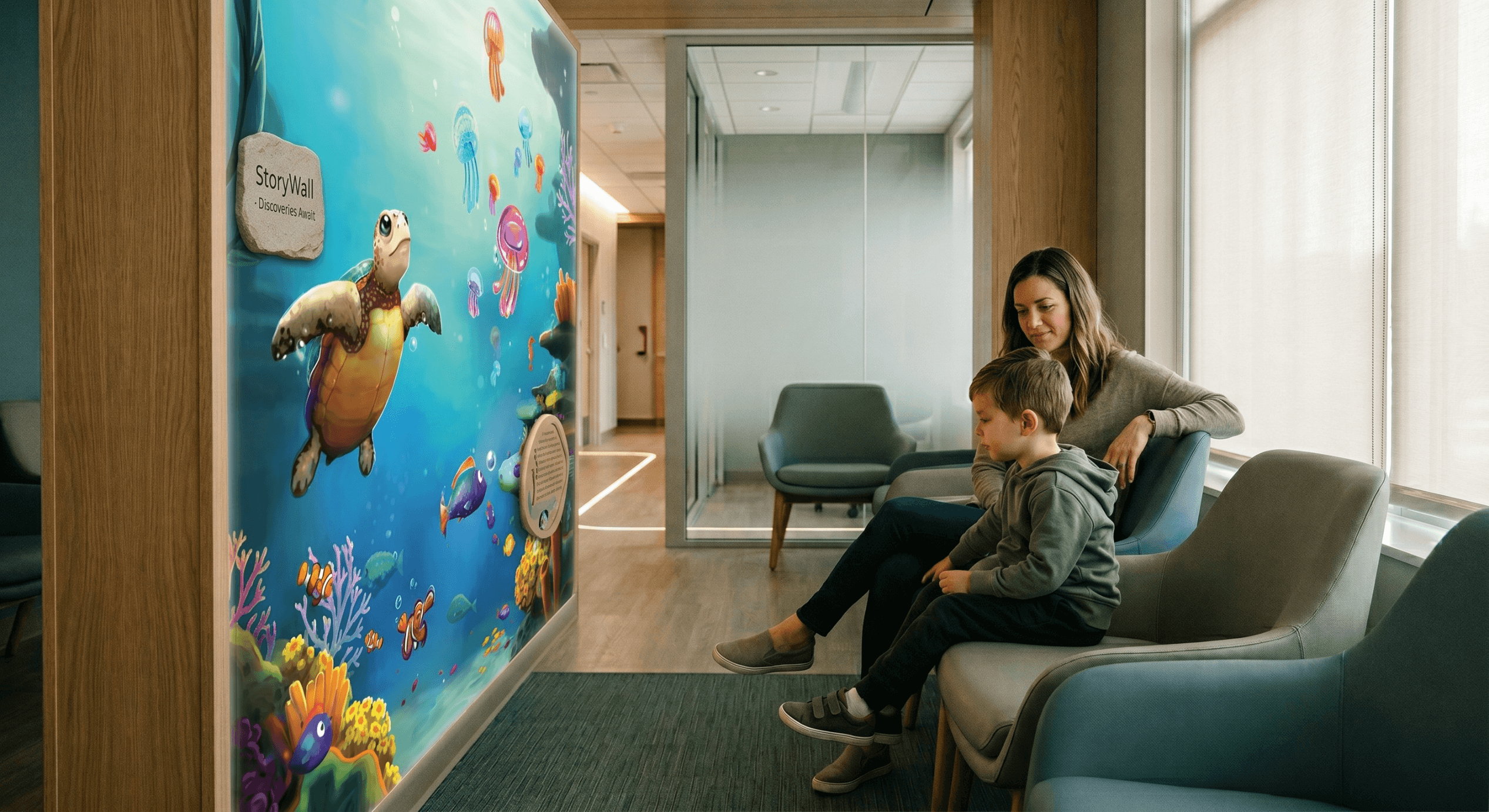
- Preparation: A waiting area that visually prepares a child for what comes next.
- Transition: A transition space that softens the shift into the exam room.
- Orientation: A focal element that remains present before, during, and after explanation.
These are architectural decisions, not aesthetic embellishments. When thoughtfully designed, these elements also give the child something in the environment they can orient to as the visit unfolds.
Relieving the Burden of Interaction
When emotional architecture is absent, the burden shifts entirely to human interaction. Clinicians compensate with reassurance. Parents fill silence with encouragement. The room itself
offers little continuity.
When emotional architecture is present, the environment carries part of the experience. It steadies attention. It reinforces instruction. It creates a sense of progression rather than abrupt change.
It can also give the child a structured way to engage with the environment while clinicians guide the visit. Solutions such as StoryWall and Breathe With Me operate within this framework, not
as isolated tools, but as elements within a larger experiential design.
Reframing Innovation as a System
This perspective also reframes innovation. Instead of asking what new features can be added to a pediatric space, we begin asking how the entire environment functions as a system. Does it prepare?
Does it guide? Does it help the child engage with the experience as it unfolds?
Creating Steadiness in Vulnerability
Emotional architecture does not eliminate discomfort. Pediatric medicine will always include moments of vulnerability. But when the environment is intentionally structured, those moments unfold within
a coherent experience rather than in isolation.
Children may not consciously analyze the design of a space, but they do register whether the experience feels steady or fragmented. Emotional architecture is simply the practice of designing that
steadiness into the environment before anyone speaks.
The Future of Pediatric Design
As pediatric spaces evolve, the question may become less about what new elements can be added and more about how the environment works as a whole. When design decisions support the flow of
the visit rather than decorate it, the room feels less like a backdrop and more like part of the experience itself.
That shift is quiet. But it changes how care is felt.
Learn More
👉 Discover why AR makes Cosmos uniquely suited for hospitals,
clinics, and therapy spaces.