Shifting Focus Beyond the Threshold
Much of healthcare innovation has focused on what happens before a patient arrives and after they leave—scheduling systems, digital check-in, billing workflows, and follow-up
communication. Yet the most fragile part of pediatric care occurs in between. It happens inside the space itself, in the minutes leading up to engagement with clinicians.
Defining the Middle Moment
When a child senses that something uncomfortable is approaching, attention narrows. It searches for cues and for certainty. Distraction offers an exit — redirecting focus
to something unrelated and creating a temporary buffer between the child and the procedure. Sometimes that buffer is enough.
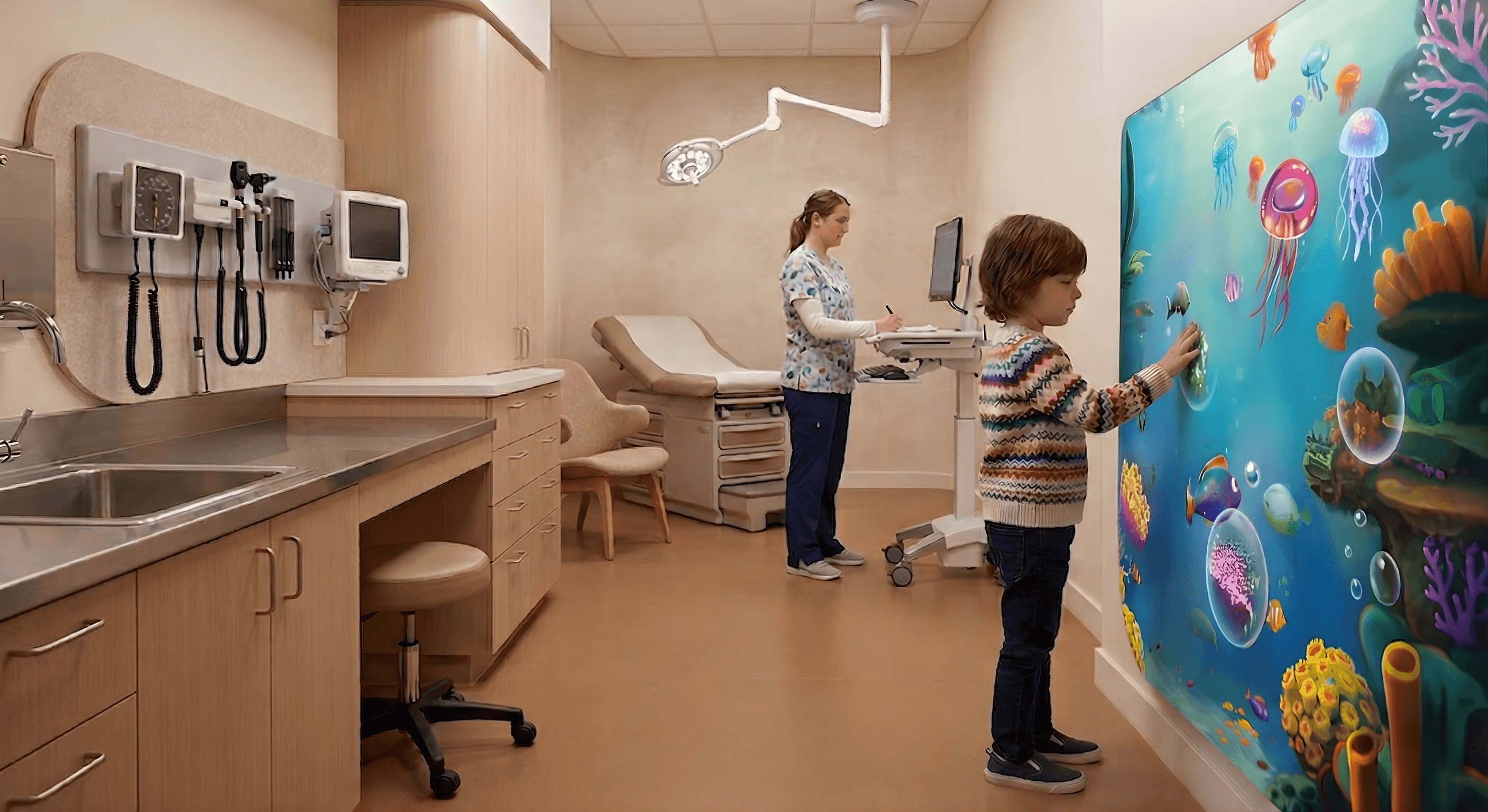
That is The Middle Moment—the place where emotional escalation is shaped by memory or anticipation. As a child crosses the threshold into the pediatric space, their attention
starts scanning: adults moving with purpose, equipment sitting in view, voices shifting in tone. None of this is alarming in isolation, yet together it signals that something
significant may be approaching.
The Role of the Environment
From that moment forward, the environment is participating—whether intentionally or not. This is where anticipatory design proves its value: by making it possible for support
to begin before escalation takes hold, and by giving the child something in the environment they can orient to as the experience begins to form around them.
Proactive vs. Reactive Care
When preparation starts at entry rather than at visible distress, The Middle Moment is no longer left to chance. The environment is not waiting to react; it is already oriented
toward the experience unfolding inside it. In the most thoughtful pediatric environments, that preparation does more than calm the moment. It gives the child a way to begin
engaging with the space around them before care begins.
The Future of Pediatric Design
As pediatric spaces continue to evolve, anticipation may become a defining quality. Not reactive. Not delayed. Simply ready for the part of care that happens between arrival
and departure—the part the child remembers most.
Learn More
👉 Discover why AR makes Cosmos uniquely suited for hospitals,
clinics, and therapy spaces.