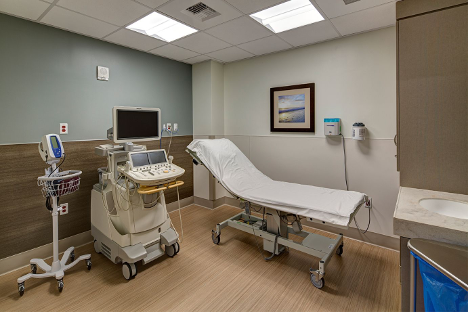
The moment a child enters a pediatric room, a conversation begins — between the child and the room itself.
This is not metaphor. It’s how the human nervous system works — and understanding it can change what designers, administrators, and clinical staff see when they look at a pediatric space. The fact is, the signals a room sends are not random. They are readable. And they are being read, by every child who enters, in the seconds before anyone acts.
The Channel Children Use
Adults process new environments largely through language and context. They read the sign on the door, recognize the reception desk, understand the function of the equipment visible on the counter. They have a framework built from prior experience that tells them what this kind of place is and what is expected of them inside it.
Children, particularly young children, don’t have that framework yet. They process environments through sensory and emotional channels that operate below language — channels that are faster, more immediate, and less subject to rational override. They read tone before they understand words. They register proximity before they process intention. They notice the unfamiliar before they can name it.
What they’re doing, in the seconds after they enter a room, is running an assessment that their nervous system has been designed to run: is this place safe, or do I need to prepare? The assessment draws on everything available — what they see, what they hear, what they smell, and what they feel in the space around them.
The room answers that question whether it intends to or not.
What the Room Is Actually Saying
Most pediatric rooms send a consistent set of default signals.
Scale: Most clinical rooms are built to adult proportions. The examination table is adult height. The counter is adult height. Even the door handle is positioned for an adult hand. A child entering this space is immediately in an environment where everything is sized for someone else. The implicit message is one the child cannot articulate but can feel: this place was not made for me.
Unfamiliar objects: Clinical equipment — even equipment that poses no threat whatsoever — registers as unfamiliar to a child who has no framework for understanding its purpose. The otoscope on the counter, the blood pressure cuff hanging on the wall, the tray of instruments covered with a cloth — each of these occupies the child’s attention and produces a version of the same question: what is that for, and will it be used on me? The room doesn’t answer. The uncertainty accumulates.
The view from child height: Adults touring a room see it from their own eye level. A child sees something different. From three or four feet off the ground, the counter is a wall. The equipment on it is partly hidden, partly visible — which may be worse than either fully hidden or fully visible, because the partly-seen object invites the imagination to complete the picture. The underside of furniture, the legs of equipment stands, the lower portions of walls — these are what a child sees most of. In most rooms, they are the least considered surfaces in the space.
Sound: Clinical environments carry a particular acoustic signature — the sounds of other rooms, equipment, ventilation, the specific quality of silence between sounds. Children are alert to auditory information in ways that adults, habituated to these environments, have long since stopped noticing. A sound that is unidentifiable is a sound that requires explanation. A room that offers none leaves that explanation to the child’s nervous system, which will tend toward threat over safety when it cannot determine the source.
The absence of anything familiar: Perhaps the most significant signal a clinical room sends is not anything specific it contains, but what it lacks. Familiar objects — the kind a child encounters in their daily life, that they associate with comfort or engagement or play — are largely absent. Everything in the room is foreign to the child’s experience. And a space that contains nothing familiar is perceived as a space that contains nothing safe.
Why This Matters More Than It Appears
None of these signals are alarming in isolation. No single feature of a clinical room produces fear. What they do, collectively, is answer the nervous system’s assessment question in a consistent direction: this place is not yours. Nothing here is within your control. Prepare accordingly.
That conclusion — reached before anyone has spoken — is the condition the clinician inherits when they walk through the door. It is the starting point from which everything else in the encounter must proceed.
And it’s worth noting what that starting point costs. A child who has already concluded that the room is threatening requires more to calm than one who has not yet reached that conclusion. The time and energy that go into managing the escalation that default room signals produce are not visible on any report. But they are real, and they accumulate across every encounter, every day, in every room where no one has asked what the child is reading.
What a Participating Room Speaks Differently
A room designed with the child’s perceptual experience in mind sends different signals. Not by eliminating clinical function, but by adding something to what the room says. Something that belongs to the child, that they can engage with on their own terms. And that answers the nervous system’s question — is there anything here that is mine?
When the room offers that signal, the conversation it’s having with the child changes. Not from threatening to safe — that would be too simple, and the child’s nervous system is not easily fooled. But from nothing here is for you to there is something here worth your attention. From vigilance to curiosity. And curiosity and fear, as anyone who has watched a child discover something new in an unexpected place can confirm, do not easily occupy the same moment.
That shift — from the room saying nothing useful to the room saying something the child can use — is what the participating room is designed to produce.
Next in the series: The Wall as the Room’s Most Underused Surface
Learn More
👉 Discover why AR makes Cosmos uniquely suited for hospitals,
clinics, and therapy spaces.