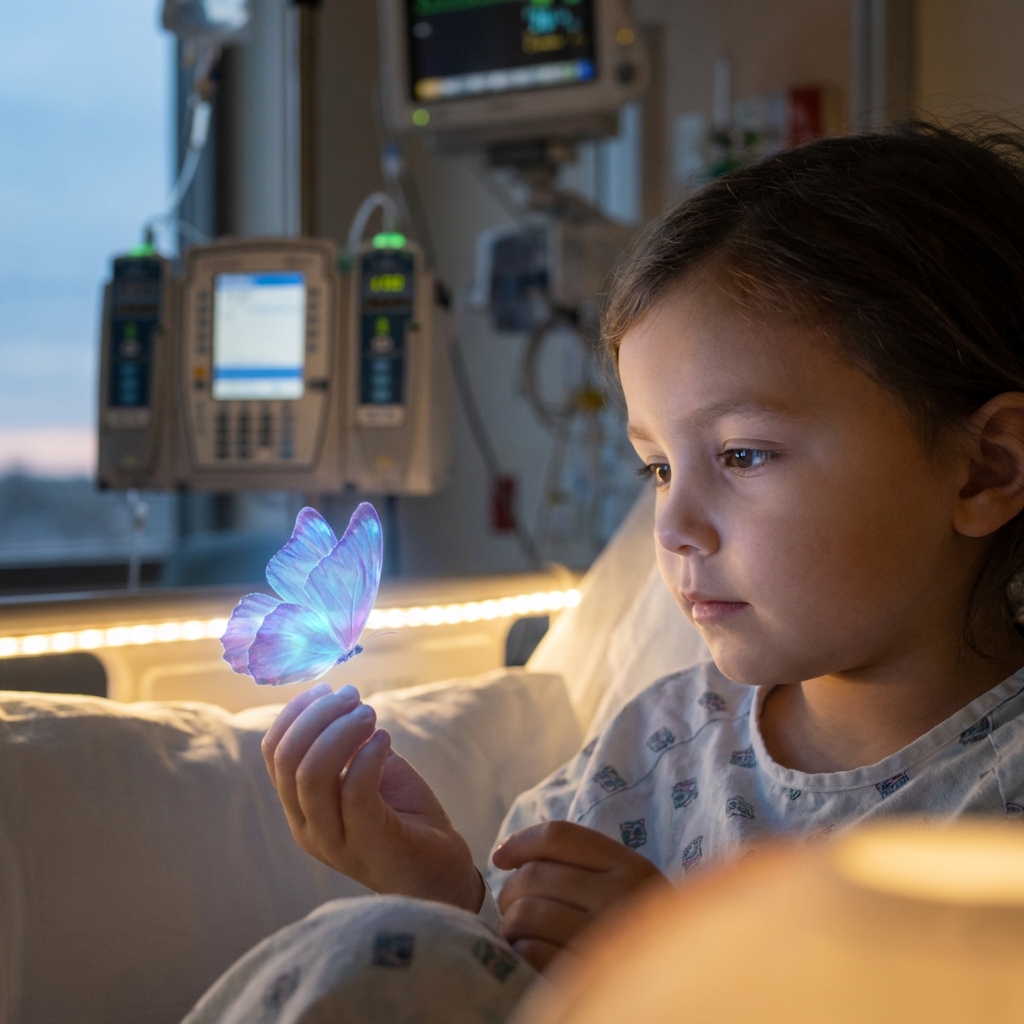
Attention is the lever that determines what the brain amplifies. When attention locks onto
uncertainty—unfamiliar sounds, unfamiliar faces, unfamiliar steps—the emotional intensity of the
moment can rise fast. When attention is guided toward something safe and engaging, the emotional arc
of that same moment can shift toward calm.
For hospital leaders, this matters because reputation is built in the moments that rarely appear on
a dashboard. It is shaped by what patients and families carry with them when they leave: how the
experience "felt," how supported they "felt," and whether the environment seemed to widen or narrow
the opportunity for calm.
Why Attention Matters More Than We Think
In high-stakes settings, the brain becomes a signal detector. It searches for meaning. It scans for
what might happen next and decides which cues deserve attention. And it often does so on reflex, not
logic.
That is why emotional escalation is frequently misunderstood. It can appear as resistance,
non-compliance, or misbehavior. But in many moments, it is simply attention locked onto threat
cues. The nervous system is doing what it was built to do: protect.
This matters because when escalation is an attention problem, it is also an environment problem. The
lever is already moving. The question is whether the clinical environment is helping guide it toward
calm or unintentionally pushing it toward uncertainty.
The Key Is Engagement — Not Distraction
Many solutions attempt to "distract" a child away from what is happening. But distraction is often
fragile. It can break the moment attention snaps back to the unknown. Engagement is different.
Engagement gives attention something stable to hold on to. It creates a focal point that can last
longer than a fleeting diversion. It introduces a predictable anchor inside an emotionally
unpredictable environment which gives the mind a pathway to follow.
This is where augmented reality becomes more than a technical feature. In the Cosmos Continuum
model, AR functions as an engagement layer—designed to guide attention toward story, imagination,
and breath, and to create opportunity for the experience to "feel" different. Not in a way that
denies reality, but in a way that makes the moment more navigable.
Engagement Is a Culture Decision, Not a Gadget Decision
Hospitals already invest heavily in clinical excellence. But families do not experience care only
through procedures and technology. They experience it through the atmosphere of the moment—how it
"feels" to arrive, how it "feels" to wait, how it "feels" when uncertainty starts to expand.
And staff experience it, too. A clinical environment can be clinically perfect but emotionally
overwhelming at the same time. When attention is consistently pulled toward uncertainty and threat
cues, the emotional load increases—not just for patients and families, but for the professionals in
the room as well.
This is why Experience Design is a leadership decision. A sense of calm is not created by asking
people to "be calmer." It is supported by shaping an environment that helps guide attention toward
safety, familiarity, and choice.
Augmented Reality in Practice
Cosmos Continuum builds AR tools that are designed to guide attention in high-stress moments,
without asking staff to become performers or placing the full burden on families.
StoryWall is designed for moments where waiting and transition can amplify
uncertainty. It gives attention a
story-based anchor—something engaging enough to hold the mind, simple enough to understand
instantly, and immersive enough to create opportunity for a child to "feel" safer in the
clinical environment.
Breathe With Me is designed for moments of immediate apprehension—when emotional
intensity is closer to the
surface. It guides attention into deliberate, directed breathing through visual engagement. The
purpose is to provide a structured experience that can contribute to a calmer moment and a
steadier sense of control.
Different tools. Same lever: attention guided toward something stabilizing.
The Takeaway
Every hospital leader knows culture shapes performance. But culture also shapes experience—and
experience shapes trust.
The Middle Moment—the moment between what a family fears and what they hope—often hinges on what the
child's attention is amplifying. In an environment where attention can be pulled toward uncertainty
in an instant, intentional engagement matters.
Augmented reality offers hospitals a new way to support emotional safety, not by replacing human
care, but by strengthening the environment around it. It creates opportunity for patients and
families to "feel" more supported in moments that matter. It supports the professionals in the room
by giving them an additional tool for shaping experience. And it helps the clinical environment
"feel" less intimidating at the exact time families need steadiness most.
Learn More
👉 Discover why AR makes Cosmos uniquely suited for hospitals,
clinics, and therapy spaces. Visit
our products page.
Patient Experience
Attention
The Middle Moment